
Investors from TEDCO and Blackbird Labs told Baltimore founders what really gets a deal moving. The short version: show your work, and keep showing it.
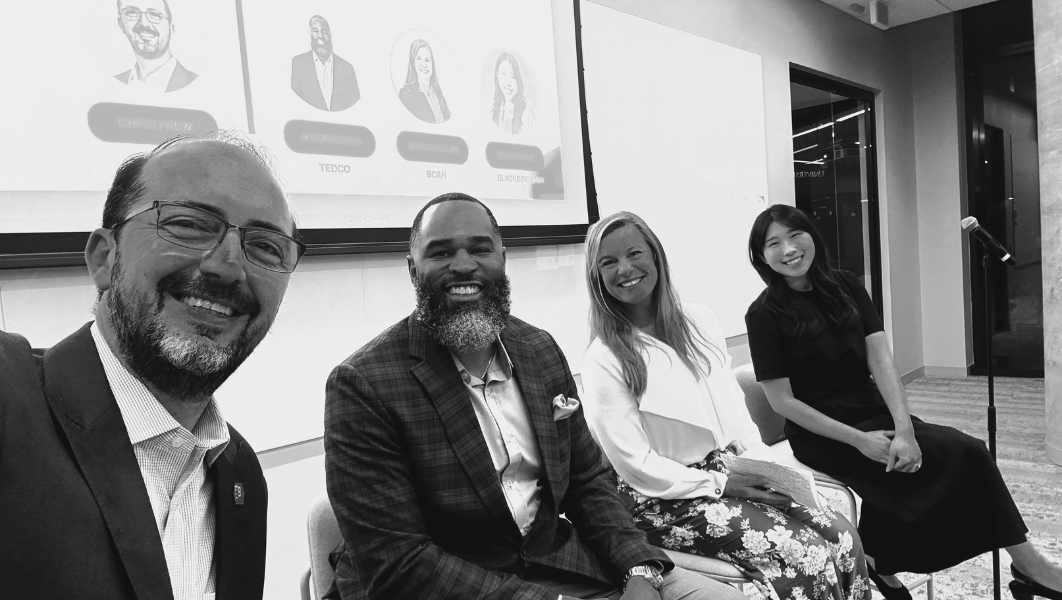
I moderated the “What Investors Want” panel at the Fueling your Technology event hosted by ETC Baltimore. It was a very relevant discussion to lead since I am raising capital for BioBuzz, so I came with real questions I wanted to know as well. I also came with sobering numbers to ground the conversation. The research I did ahead of the talk suggests only 1 to 4 percent of startups that try to raise capital ever do, and angel groups invest in about 2 percent of the deals they see. Those are important statistics to frame just how hard it is to be a founder.
Joining me were Jason Harris, Senior Investment Analyst at TEDCO, which writes $100,000 to $1.5 million checks into Maryland startups; Esther Park, PhD, Associate Director of Ventures at Blackbird Labs, a Baltimore biotech investor writing checks of up to $20 million; and Sarah Sedlak of SC&H Group, who helps founders get ready for diligence.
One idea kept coming up, and I’ve started calling it Proof of Motion. Early-stage investors want to see that a founder turns time into evidence, and that the evidence keeps showing up between conversations.
Getting in the Door
The panel agreed that warm introductions work best, but the real issue is whether your story can travel without you. Sarah put it plainly: investors don’t fund how much you love the science. They fund the problem, the market, the team and how you’ll make money. If she can’t repeat your pitch in a sentence or two, she can’t pass it along.
Jason explained why the bar is high. When he forwards a deal, his reputation goes with it. “They’re not picking up my calls anymore if I continue to send them dead deals,” he said. Esther added that Blackbird never invests alone, so a clear, punchy pitch often gets shared with co-investors even when it isn’t a fit. Her tip for founders without a network is to send materials, like a deck, a demo photo or a short video, rather than a long email, and always state your ask and check size.
What Stood Out From Esther Park
Time is the pre-seed currency. Pre-seed founders don’t have much money, so Esther doesn’t judge them on what they’ve spent. “Time has now been your commodity,” she said. She wants to know how you used it. How many customers did you talk to? If you’re addressing an unmet medical need, how many doctors?
She pointed to a recent Blackbird pre-seed deal where the founders showed up with quotes from every manufacturer they planned to use. They had done the site visits and picked their vendors. All they needed was the check to start production. That work cost little money, but it took real time, and it took much of the risk out of the deal.
Create a little FOMO. A tight raise with visible momentum makes investors speed up. A pitch she’s been hearing for two years with no progress does the opposite.
Practice on your B list. Rank investors into A, B and C tiers. Pitch your B list first to collect feedback and work the answers into your deck, then go to your A list with a clean pitch.
A no is one no. Most investors say no far more often than yes. A no is a no for that investment, not a verdict on your company, so keep pitching and look for patterns in the feedback.
What Stood Out From Jason Harris
Investors are watching execution. “Execution risks are what we’re evaluating on a daily basis,” Jason said. TEDCO’s diligence can stretch for months, and each time the team checks back in, it expects updates. He described a founder with great rapport who, six months after applying, had no new materials to share. For Jason, that was a red flag.
Send updates nobody asked for. The founders who stand out send a monthly update whether TEDCO requests one or not. It shows what they’ve done and that they can communicate it, and it makes him want to lean in.
Pitch 100 investors, not 10. One of Jason’s biggest frustrations is founders who’ve talked to just a handful of investors. He compared it to job hunting: nobody expects an offer after ten applications. He wants a strategic list of 100-plus investors that fit your thesis, and he urged founders to look beyond Baltimore.
Be coachable. Conviction matters, but so does acting on feedback. Coming back months later without having addressed it tells him a lot. He also noted that a check from a sector-focused angel group makes the TEDCO conversation much easier, and that TEDCO’s Concept Capital program offers $25,000 investments for the earliest companies.
What Stood Out From Sarah Sedlak
Get the fundamentals in place. Sarah sees early founders lead with big vision before the basics are done. Do you have a bank account and an EIN? Have you talked to a banker and a lawyer? Those steps are what make investors take you seriously, and advisors like her offer monthly office hours to help.
Know your burn. Every milestone has a price. Know how fast you’re spending, and whether this raise gets you to the next inflection point you promised. Without that, she said, “you’re not running your company. You’re living out a dream.”
Answer “why now.” Markets shift in weeks, especially in tech. Show why this is the right moment for your company, and that you can move fast enough to keep up.
Start with grants and competitions. Non-dilutive funding and pitch competitions sharpen your story before you ask anyone to take on risk. Competitions also put you in front of judges you might never meet otherwise.
Investors Buy the Company, Not the Product
Founders fall in love with their product, but investors are buying the company. They only get paid when someone eventually buys it. That changes what a pitch needs to show.
Esther wants every dollar tied to the next inflection point, such as a customer milestone, a regulatory step or a working prototype. If half of a $5 million raise goes to hiring, she wants to know who and why. Blackbird also models future rounds and dilution, because it owes its investors a return.
Fit cuts both ways, too. As Esther put it, “Not all good money is good money.” The right investor brings expertise and support, not just a check, and you shouldn’t be afraid to negotiate terms. My own two cents as a founder: rule number one is don’t die. A messy cap table matters less if it’s what got you to a Series A. Jason’s caution is the right balance, though. Founders who stack too many small checks can give away too much before the round that really counts.
The 90-Day Test
I closed by asking what a pre-seed founder who isn’t ready yet can do in 90 days to get back on their radar. Jason said to start before the meeting ends by asking the investor exactly what’s missing.
Esther’s answer was my favorite of the day. In 90 days, she wants to open your data room and see a real difference: market research, financial models, notes from office hours, customer discovery. “I just want to see that you’ve executed for 90 days and done something other than talk,” she said.
That’s Proof of Motion in one sentence. Esther looks at how you turned time into evidence before you met her, and Jason looks at whether that evidence keeps coming after. My advice from the founder’s seat is to go back to the investors who passed, and bring something new. I keep a list on my wall of everyone I plan to go back to as BioBuzz hits its milestones.
Chris Frew is the founder and CEO of BioBuzz Networks, a life sciences community, media and talent marketplace platform serving the BioHealth Capital Region, Greater Philadelphia and Research Triangle Park.